
Radio communication on board is more than just exam material.
Anyone planning to rent a boat or charter a sailing yacht should understand how communication at sea works.
Because between a relaxed harbour manoeuvre and a real emergency, it is often just one reach for the microphone.
Modern yachts come with chartplotters, apps and digital weather data.
But when communication needs to be fast, clear and internationally understood, the radio remains one of the most important instruments on board.
Many sailors primarily associate marine radio with radio licences, exam questions or the famous Mayday call. In practice, however, radio communication on board is much more relevant to everyday life. It helps when entering marinas, contacting harbour authorities, receiving traffic information, dealing with medical issues on board and, of course, when a small problem suddenly turns into a serious situation. Anyone looking to rent a boat or charter a sailing yacht with Sailogy gains not only safety from solid radio knowledge, but also greater confidence.
Its practical value becomes especially clear in everyday chartering. Anyone who knows the most important international terms and procedures communicates more calmly, more clearly and more professionally. Marine radio is not a relic from a technical past, but seamanship in practice. And it is often faster, more direct and more reliable than any improvised phone call.
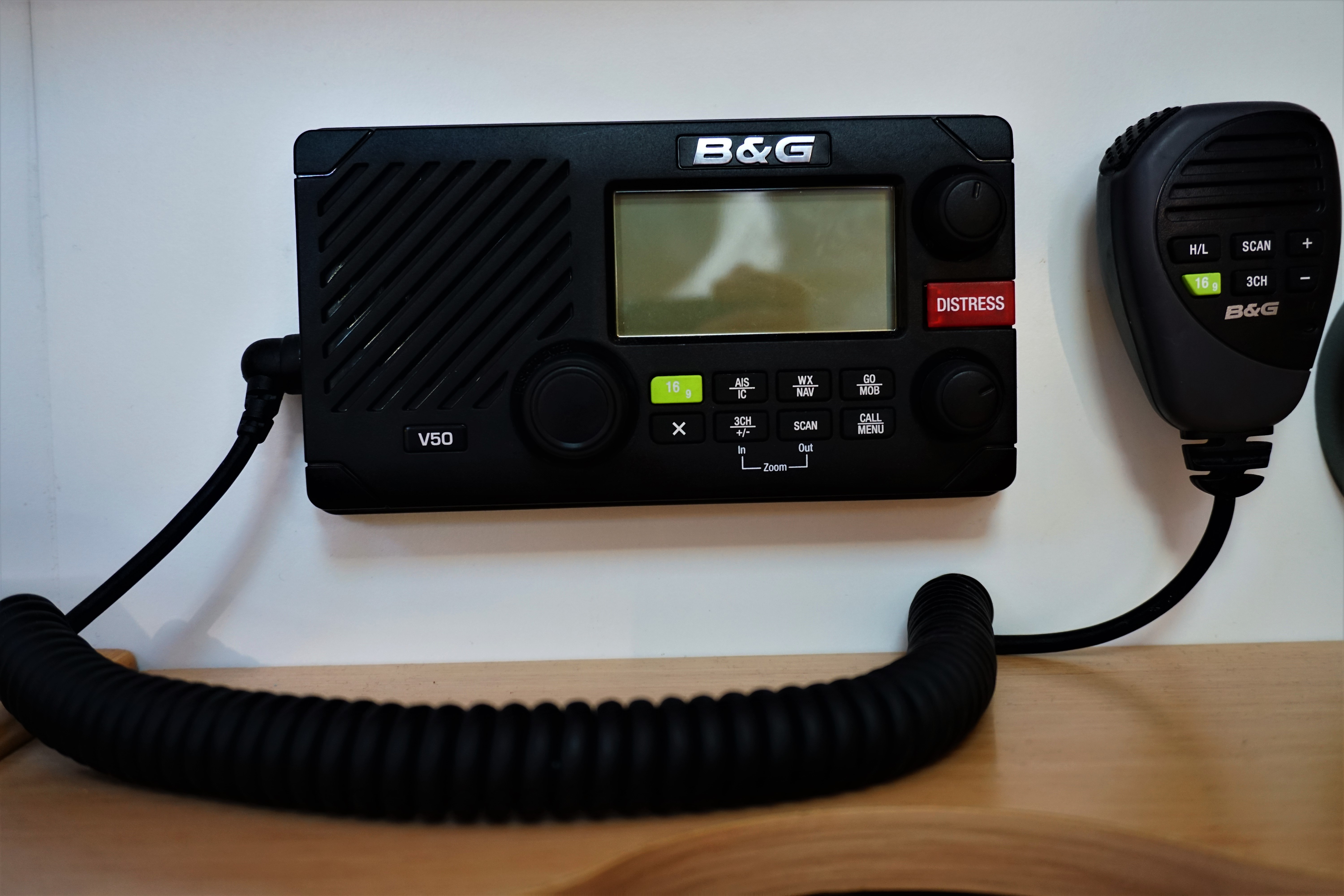
Anyone looking into radio communication on board quickly comes across international abbreviations. VHF stands for Very High Frequency. In German, people often use the term UKW, meaning ultrashortwave. On charter yachts, this almost always refers to standard marine radio, which vessels use to communicate with marinas, coast radio stations, harbour authorities and other ships. When people on board talk about “the radio”, this VHF set is almost always what they mean.
Another key term is DSC, which stands for Digital Selective Calling. This function adds a digital component to traditional voice radio. DSC makes it possible to send targeted calls or distress alerts in a standardised format. Important information such as the vessel’s identity and, when GPS is correctly connected, often also the position, can be transmitted automatically.
Easy way to remember it: VHF/UKW is standard marine radio, DSC is the digital alert and calling function, and GMDSS is the international system behind it.
The wider framework is the GMDSS, the Global Maritime Distress and Safety System. This international system regulates distress, urgency and safety communication at sea. Charter sailors do not need to know every technical detail in depth. What matters is understanding the basic principle: radio follows clear rules, fixed priorities and internationally standardised terminology. That is exactly what makes it so valuable in an emergency.
Many crews instinctively reach for their smartphone first. That is understandable, but it is not always the best solution on the water. Mobile phones are convenient; radio is maritime. Anyone planning to charter a sailing yacht or rent a boat with Sailogy should understand that difference. A marine radio is part of a standardised infrastructure. It allows you to reach marinas, harbour authorities or traffic services directly through the intended channel, without having to look up phone numbers or rely on local mobile coverage.
This is especially helpful when entering a marina. If you call in early, you can ask for a berth, receive information about the entrance or prepare for the right mooring manoeuvre. That saves time, reduces uncertainty and takes pressure out of harbour approaches that are already tense enough.
In busy cruising grounds, radio communication is also a major safety advantage. In narrow approaches, near larger ports, in front of bridges or in areas with commercial shipping, it creates clarity. You understand better what is happening around you and can communicate your own intentions more clearly. That improves safety for everyone involved.
The biggest misconception about marine radio is probably that it is only used in absolute emergencies. Of course, the distress call is central. In reality, however, the most common use of a radio set is in normal everyday life on board. Anyone who wants to charter a sailing yacht benefits from clear and standardised communication already in the harbour, at anchor or underway.
Smaller incidents in particular are typical radio moments: engine failure at a harbour entrance, uncertainty during approach, an injured crew member without immediate danger to life or problems caused by wind and traffic in confined waters. In situations like these, radio is often faster and more direct than any other means of communication.
There is also a psychological advantage. Anyone familiar with the equipment stays calmer. Anyone who stays calmer communicates more clearly. And anyone who communicates more clearly usually gets help or the information they need more quickly.
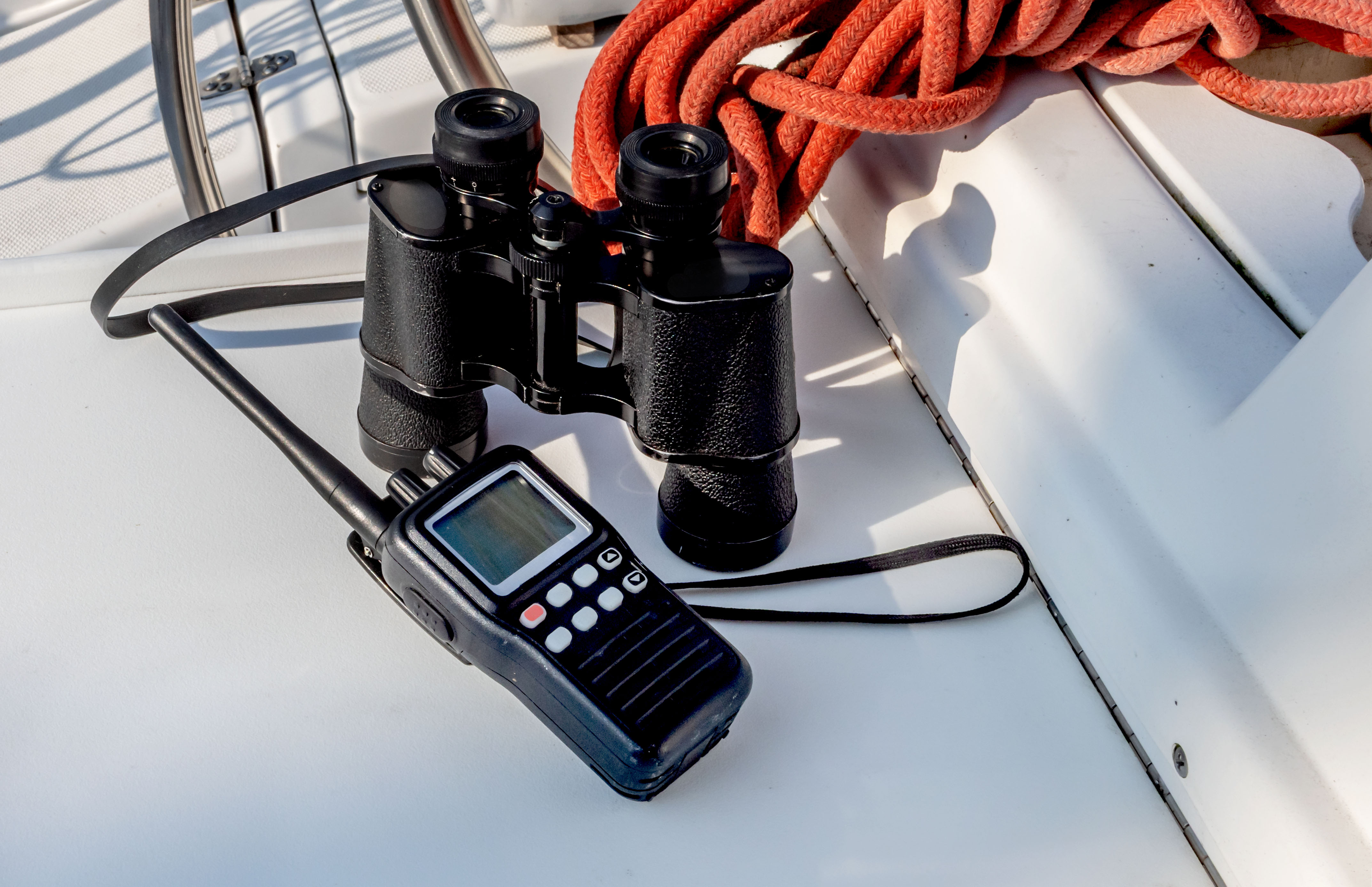
Marine radio follows fixed priorities. This structure is especially helpful in stressful situations because it creates order. The highest level is Distress. This means a situation in which the vessel or people on board are in grave and imminent danger and need immediate assistance. The international signal word for this is Mayday.
Below that comes Urgency. The corresponding signal word is Pan Pan. It is used when a situation is serious and requires attention or assistance, but there is not yet immediate danger to life. This could include engine failure in an unfavourable position or a medical problem that needs monitoring and support.
The third category is Safety. This covers important safety information, for example relating to weather, visibility, navigation or dangers to other vessels. Not every important message is automatically an emergency call. It is precisely this clear distinction that makes the international radio system so efficient.
Easy to remember:
Mayday = immediate grave danger.
Pan Pan = serious situation without immediate danger to life.
Safety = important safety information.
DSC is the digital extension of traditional voice radio. On modern charter yachts, this is a major safety advantage. Instead of communicating only by voice, a vessel can send a digital call or distress alert. A DSC call is standardised and includes the vessel’s identity via the MMSI, the Maritime Mobile Service Identity. If the device is correctly connected to GPS, it can also automatically transmit the vessel’s position.
It is important to understand the difference between the channels. Channel 70 is reserved for DSC, meaning digital traffic. Channel 16 is the international calling and distress channel for spoken communication. A DSC Distress Alert therefore does not replace the spoken distress call, but complements it. Ideally, the digital alert is sent first and then the situation is clarified by voice.
For crews planning to rent a boat or charter a sailing yacht with Sailogy for the first time, this point is especially important: a marine radio is not just a microphone with a speaker, but an intelligent safety instrument that can transmit structured information in an emergency.
In an emergency, structure helps most. If there is a genuine distress situation and the equipment is working, the DSC Distress Alert is sent first. This is done by pressing the red distress button on the VHF radio. The unit then sends a digital distress alert on Channel 70.
Immediately afterwards, the spoken distress call follows on Channel 16. It begins with the international signal word Mayday, Mayday, Mayday. Then you state the vessel’s name, and if applicable the call sign and MMSI, followed by the position, the nature of the distress, the assistance required and the number of people on board.
The basic logic of the distress call:
Who are we?
Where are we?
What has happened?
What kind of help do we need?
How many people are on board?
A typical structure might look like this:
Perfect wording is secondary in such moments. What matters more is clarity, sequence and calmness.
Mayday is used when there is immediate grave danger to the vessel or to people on board and immediate assistance is required. This includes fire on board, serious flooding, major collisions or situations in which crew members are in acute danger.
Pan Pan is used when the situation is serious but there is not yet immediate danger to life. This could be an engine failure in an unfavourable location, an injury on board without immediate danger to life, or an urgent navigational problem.
The key point is this: the red distress button is intended for genuine distress situations. For a Pan Pan call, no Distress Alert is sent. Instead, if the device supports it, an Urgency Call is made via the DSC menu, followed by the spoken message on Channel 16.
After a distress call, the goal should not be frantic improvisation, but orderly communication. That is why the rule after transmitting a Distress Call is: listen, keep the channel clear and pay attention to replies or instructions. Rescue services or nearby vessels need clear information. Anyone transmitting in a hectic or disorganised way may unintentionally make assistance more difficult.
Radio discipline is just as important when hearing someone else’s distress call. If you receive another vessel’s Distress call, you should not automatically start transmitting yourself in an uncoordinated way. The first step is always to listen carefully. You become active if you are actually able to help or if an official authority requests it.
Anyone planning to rent a boat or charter a sailing yacht with Sailogy should not wait until the radio is needed before looking at it. Good practice starts when the yacht is handed over. That includes asking for an explanation of how the unit works: where is Channel 16, how do you switch channels, is the MMSI programmed, is GPS position connected, how do volume and squelch work, and how do you trigger the DSC Distress Alert in an emergency?
This short briefing is especially important on charter yachts with different brands and models of equipment. In an emergency, it is not the right moment to start figuring out the radio menu structure.
Radio communication on board is not an abstract specialist topic, but a practical tool for safety, everyday life and confidence on the water. Anyone who understands VHF, DSC, Mayday and Pan Pan gains more than just technical knowledge: they gain the ability to act. In everyday chartering, radio makes communication with marinas, harbour authorities and traffic services much easier. In critical situations, it creates structure and speed. And in an emergency, the combination of a digital DSC Alert and clear voice radio can be decisive.
Anyone planning to rent a boat or charter a sailing yacht with Sailogy should therefore not see the radio as something alien, but as a natural part of good preparation. That is its real strength: not technology for its own sake, but clear, internationally understandable communication when it matters most.

€ 4,040
price of the whole boat

€ 2,240
price of the whole boat

€ 1,365
price of the whole boat

€ 4,480
price of the whole boat

€ 5,040
price of the whole boat

€ 2,800
price of the whole boat

€ 1,538
price of the whole boat

€ 1,176
price of the whole boat

Our regular email newsletters include information about our boats, holiday ideas, destination insights and cultural briefings. You can unsubscribe at any time and we'll treat your data with respect, never passing on your details to third parties. Find full details of our data management in our Privacy policy page
By signing up, I agree to Sailogy's T&C's and Privacy policy

Looking for inspiration for your next sailing holiday? Packed with insights on trending sailing destinations plus stories from expert sailors and first-timers, our brand new digital magazine - Magister Navis - will guide your way to your next sail.
View magazine

