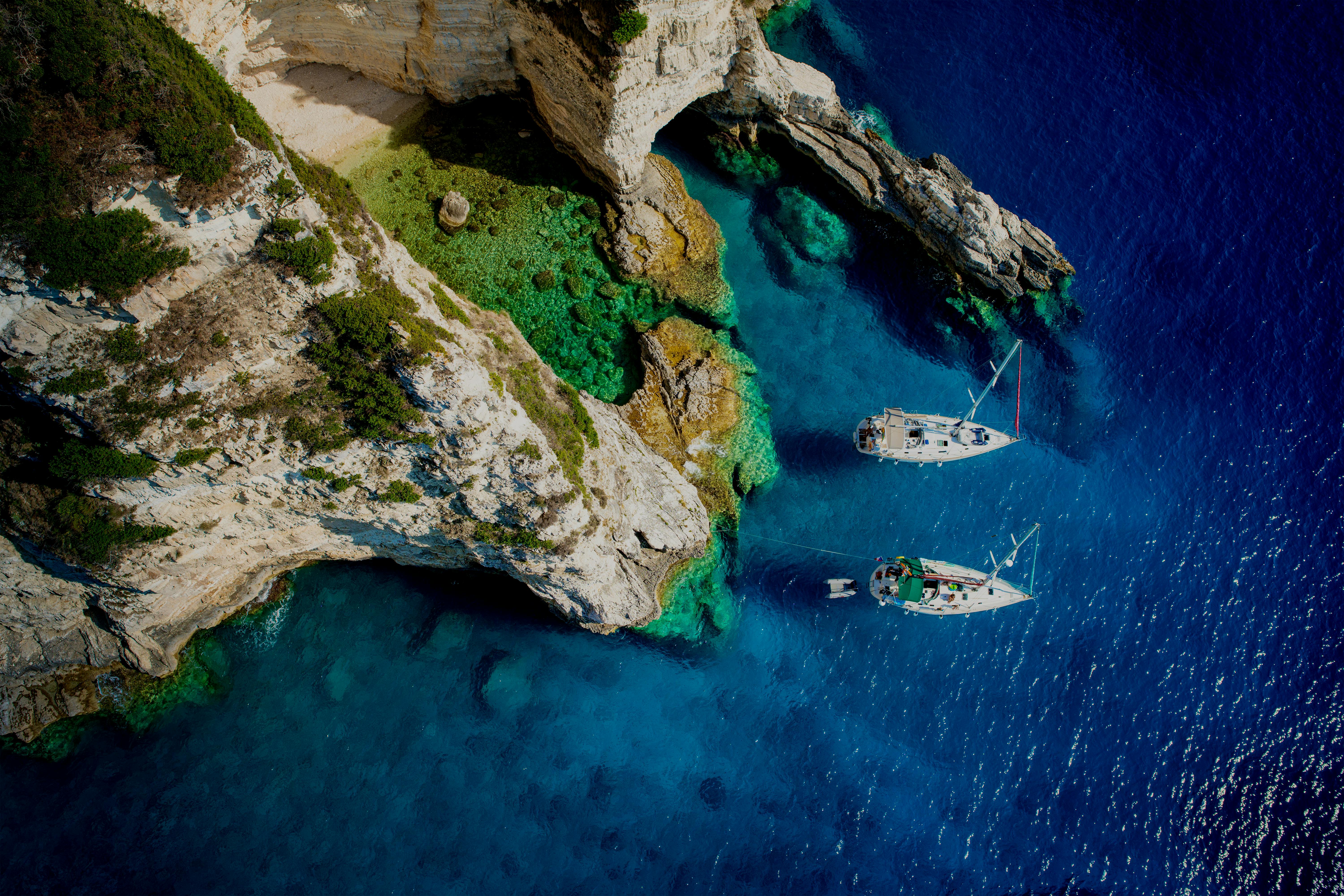
If you’re planning a sailing holiday in Greece, especially in the Cyclades Islands, there is one word you’ll hear again and again: Meltemi.
It is the most famous summer wind in the Aegean Sea, and also one of the main elements that can shape your route, comfort on board, anchoring choices and daily sailing schedule.
The Meltemi wind in Greece is not just a generic breeze or a passing weather pattern. It is a strong seasonal northerly wind that usually blows from late spring to early autumn, often reaching its peak in July and August. In the right conditions, it creates an ideal sailing breeze for experienced crews. In stronger episodes, it can make some passages in the Cyclades significantly more demanding.
That is why understanding the Meltemi matters whether you are an expert skipper, a sailor chartering bareboat for the first time in Greece, or simply part of a crew trying to choose the best moment to move between islands.
In this article, you’ll find a clear and practical overview of what the Meltemi is, when it blows, where it is strongest, what sea state it can create, and how to sail more safely in the Cyclades during summer. The goal is simple: help you enjoy the beauty of the Aegean with more awareness, better timing and fewer surprises.
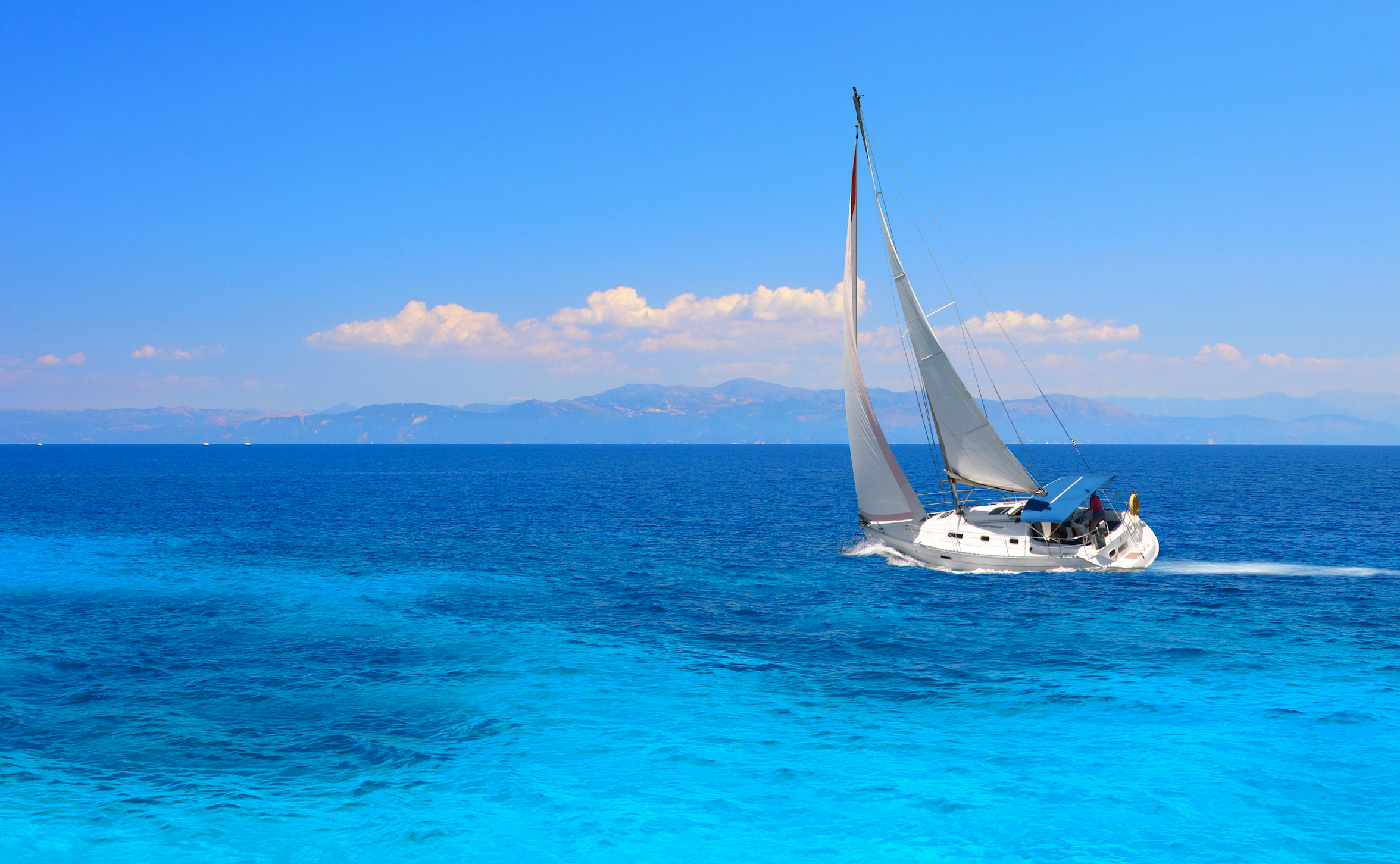
The Meltemi is a dry, powerful northerly wind that prevails over the Aegean Sea from May to September, typically peaking between mid-July and mid-August. It is one of the most important weather factors to consider when planning sailing in the Cyclades, because it directly affects daily passages, comfort on board, anchoring strategy and route selection.
The wind has been known since ancient times. Greek writers described it as both a blessing and a force to respect: welcome relief from the summer heat, but also a powerful presence for anyone crossing the islands by sea. The word itself is often linked to the Italian expression mal tempo, meaning bad weather.
From a meteorological perspective, the Meltemi develops due to the interaction between a high-pressure system over the Balkans and a low-pressure system over Turkey and Asia Minor. This pressure difference accelerates the air over the Aegean and creates the persistent northerly flow that sailors experience throughout the Greek summer.
Why it matters: the Meltemi is not just “a windy day in Greece”. It is a seasonal wind system that shapes the entire sailing experience in the Cyclades, from departure times to harbour choices.
The Meltemi affects most of the Aegean basin, but not all areas in the same way. It generally blows in a broad arc: from the area around Çanakkale and Limnos, across the Cyclades in a north to north-east direction, and then towards the Dodecanese in a north-west direction.
The Cyclades Islands are among the most exposed sailing grounds in Greece. Their mountainous, arid terrain warms faster than the surrounding sea, intensifying local pressure differences and strengthening the wind. This is one of the reasons sailing the Aegean Sea in summer can be both spectacular and technically demanding.
Topography also plays a major role. High islands, capes and ridges force the wind to accelerate around edges and through channels, often producing stronger gusts and local wind shifts. In practice, the wind you feel offshore may be very different from what you encounter near a headland or on the leeward side of an island.
In a typical Meltemi pattern, winds often range between Force 5 and Force 7 on the Beaufort scale. In exposed areas, gusts can easily reach Force 8, Force 9 or even higher. For this reason, anyone planning bareboat sailing in the Cyclades should take the forecast seriously and interpret it with local context.
What makes the Meltemi particularly demanding is not just the average wind speed, but the frequency and intensity of the gusts. In the Cyclades, you are often not sailing in a stable breeze for hours: you are sailing through repeated strong gusts that require attention, anticipation and good sail reduction timing.
This is why experienced skippers often look more carefully at the gust forecast than at the average wind number. On paper, a forecast may look acceptable. In reality, the local topography can make conditions much stronger around island edges and exposed crossings.
Pro tip: when checking the weather, ask yourself not only “what is the forecast offshore?” but also “what could the gusts feel like near cliffs, capes and narrow passages?”
Strong wind is only one part of the challenge. When the Meltemi blows for several consecutive days, the sea state in the Aegean often becomes rough and tiring. It is common to encounter short, steep waves between 2 and 5 metres, especially in open channels and exposed crossings.
Unlike long, regular swells, the Aegean seas can feel abrupt and repetitive. Around islands, reflected waves may interact with the main sea state, creating confused water from more than one direction. This makes sailing conditions in the Cyclades feel harder than the forecast numbers alone would suggest.
For less experienced crews, this is often the real issue. Even if the wind itself seems manageable, steep chop and repeated slamming can make the passage uncomfortable, tiring and sometimes unsafe for the people on board.
If the Meltemi has been blowing hard for days, don’t expect the sea to calm down immediately just because the wind forecast improves. The sea often remains rough for longer.
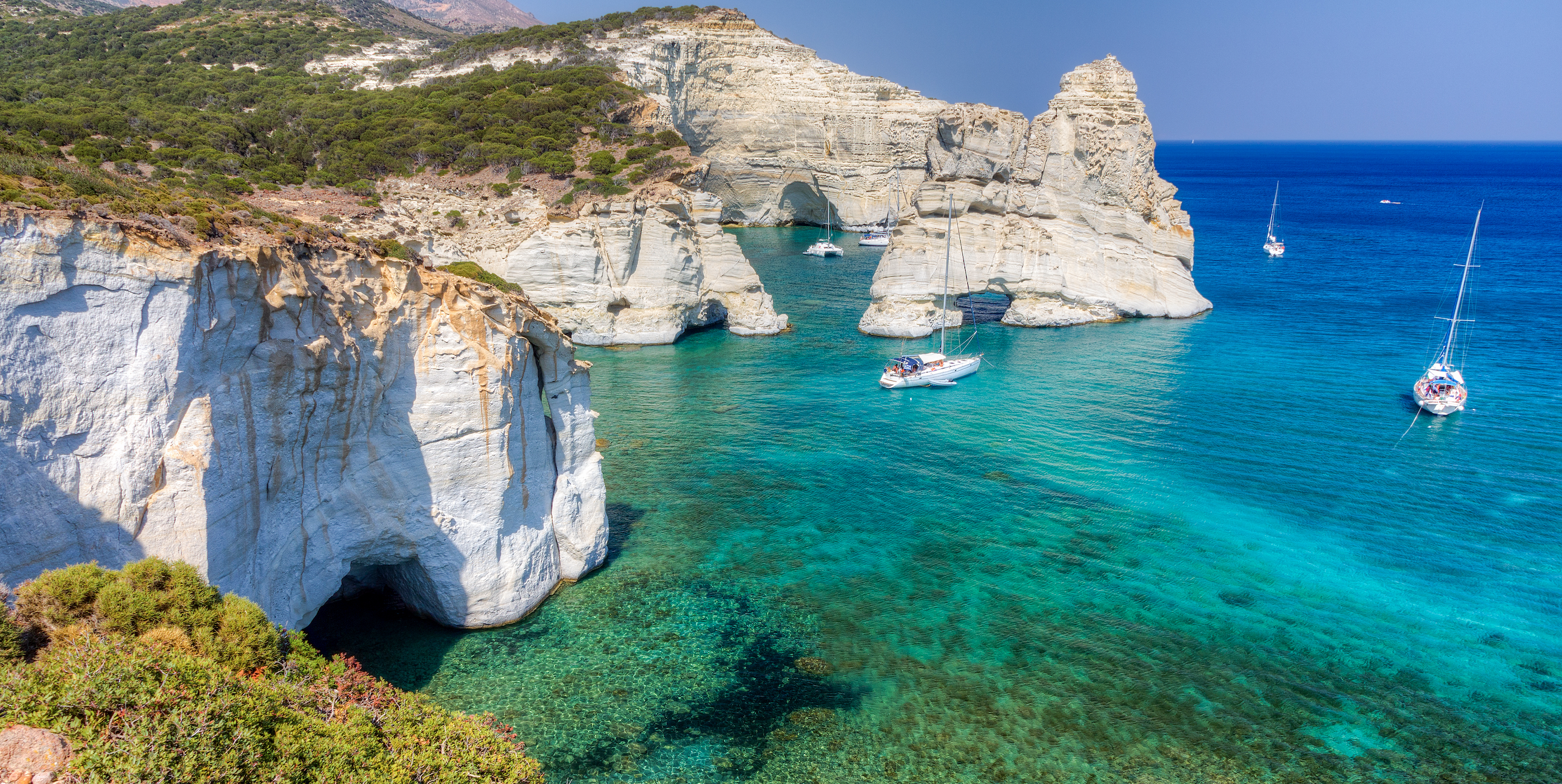
One of the most useful aspects of the Meltemi is that it often follows a recognisable daily cycle. It is usually lighter in the early morning, builds in the late morning, peaks in the afternoon, and often eases after sunset.
For anyone planning sailing routes in the Cyclades, this has practical consequences. A departure at 7:00 or 8:00 in the morning can transform a demanding crossing into a much more manageable one. Waiting until midday can mean facing stronger winds, rougher seas, and a far less pleasant passage.
This is why many local skippers prefer to cover miles early, then spend the strongest hours of the day in a protected harbour, a sheltered bay or a short, easy leg between nearby stops.
Best strategy: use the calmer morning window for longer passages, and avoid forcing an exposed upwind crossing in the afternoon unless conditions are clearly manageable for both boat and crew.
The Meltemi should never be underestimated, but it also doesn’t mean you cannot enjoy an unforgettable sailing holiday in Greece. It simply rewards good seamanship, flexible planning and respect for local conditions. In many cases, the safest choice is also the smartest: shorten the leg, change the route order, or stay put for a few extra hours.
Plenty of harbours in the Cyclades offer good protection from northerly winds. Places such as Merichas in Kythnos and Foinikas in Syros are often appreciated when the wind is up. The same logic applies to anchorages: choose bays with protection from the north, solid holding and enough room to anchor with confidence.
At anchor, remember that even sheltered bays may still receive gusts descending from the hills. A sandy bottom with good holding is ideal, and in stronger conditions, many skippers prefer to lay plenty of chain rather than the minimum scope.
Whether you are an experienced skipper or planning your first bareboat charter in Greece, this simple checklist can make your week in the Cyclades smoother and safer.
For all its power, the Meltemi also has its advantages. It is the prevailing summer wind, which means it is often more predictable than unstable local weather systems. It brings dry air, excellent visibility, cooler temperatures and real sailing breeze, which is exactly why so many experienced sailors love the Aegean in summer.
Ultimately, the goal is not to fight the Meltemi. The goal is to understand it, respect it, and adapt your plans accordingly. Do that, and sailing in the Cyclades during summer becomes one of the most rewarding and memorable experiences in the Mediterranean.
Having sailing experience is certainly a great advantage, but navigating the Cyclades during the Meltemi season also requires local knowledge: the ability to identify the best sheltered spots, understand how the wind accelerates between islands, and know when it’s wiser to set off—or simply wait. This is exactly where the presence of a professional skipper can add real value, even for sailors who are used to being in charge themselves.
Choosing a skipper doesn’t mean giving up the joy of sailing; it means experiencing it in a more relaxed and mindful way. Someone who truly knows these waters can recommend better-protected bays, help you avoid uncomfortable passages, adjust the itinerary according to the real sea conditions, and make the entire week flow more smoothly—especially when the wind shifts in strength from one day to the next.
Sometimes the smartest choice isn’t doing everything on your own; it’s having someone on board who knows these waters inside out, allowing you to enjoy the very best of the Greek islands with greater ease and confidence.

€ 4,040
price of the whole boat

€ 2,240
price of the whole boat

€ 1,365
price of the whole boat

€ 4,480
price of the whole boat

€ 1,435
price of the whole boat

€ 5,040
price of the whole boat

€ 1,148
price of the whole boat

€ 2,480
price of the whole boat
Our regular email newsletters include information about our boats, holiday ideas, destination insights and cultural briefings. You can unsubscribe at any time and we'll treat your data with respect, never passing on your details to third parties. Find full details of our data management in our Privacy policy page
By signing up, I agree to Sailogy's T&C's and Privacy policy
Looking for inspiration for your next sailing holiday? Packed with insights on trending sailing destinations plus stories from expert sailors and first-timers, our brand new digital magazine - Magister Navis - will guide your way to your next sail.
View magazine

